
Best Time to Visit Morocco: Region by Region, Month by Month
Spring and autumn suit almost all of Morocco; summer belongs to the coast and the Atlas, winter to the cities and the desert by day, while school holidays, Christmas, Easter and Ramadan (from about 8 February 2027) shape prices and pace.
In this guide
For a trip that mixes Marrakech, the Sahara and the coast, the easiest months are spring (March to May) and autumn (late September to mid-November): warm days in the cities, bearable heat in the dunes and calmer weather in the mountains. Morocco is not one climate, though. Summer is fine on the Atlantic coast and in Atlas villages but brutal inland; winter is pleasant in the cities and the desert by day, with cold nights. What drives prices and crowds most is the calendar: Christmas–New Year, Easter and European school holidays. Ramadan, expected to start around 8 February 2027, changes the rhythm of daily life without closing the country.
Four climates in one country
Imperial cities: Marrakech and Fes
Marrakech lies on a plain at about 460 m. Long-term averages run from roughly 6–19°C in January to 12–26°C in April, 21–38°C in July and 15–28°C in October, and heatwaves can push the thermometer above 45°C. Fes follows the same pattern. Winter mornings and evenings are chilly, and many older houses, riads included, were built to stay cool rather than warm.
Tip: Booking a riad between December and February? Ask whether the rooms have heating and whether the courtyard is covered. It makes a real difference at night.
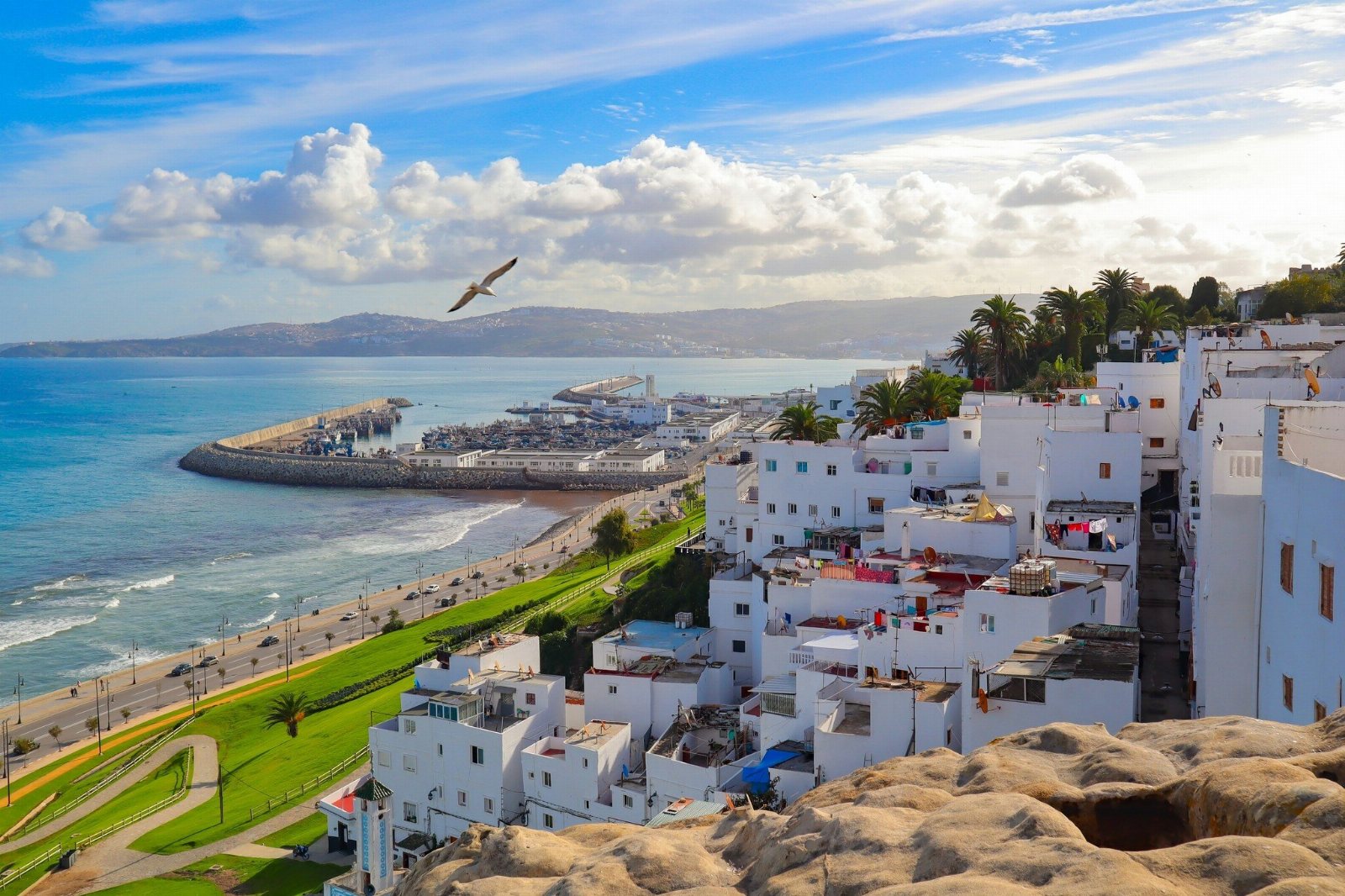
The Atlantic coast: Essaouira
A cold ocean current keeps Essaouira mild all year: about 11–18°C in January and 18–22°C in July and August. The sea peaks at around 22°C in August. Rain (about 300 mm a year) falls mostly from November to February. The defining feature is wind: the trade wind blows most steadily from May to September and is often strongest from July to September. That makes Essaouira a magnet for kitesurfers and windsurfers, and a place where you will want a jacket on a summer evening. Mornings can also be misty.
The desert: Merzouga
The Erg Chebbi dunes have a true desert climate. Typical highs are around 19°C in January with nights around 6°C, and cold snaps can bring nights close to freezing; the nearby Errachidia station averages about 3°C at night in January. In July, average highs reach about 43°C. Spring brings warm days but also windy spells that can lift sand. In mid-summer, daytime heat makes camel treks and dune walks hard work.
Mountains: the High Atlas and the Rif
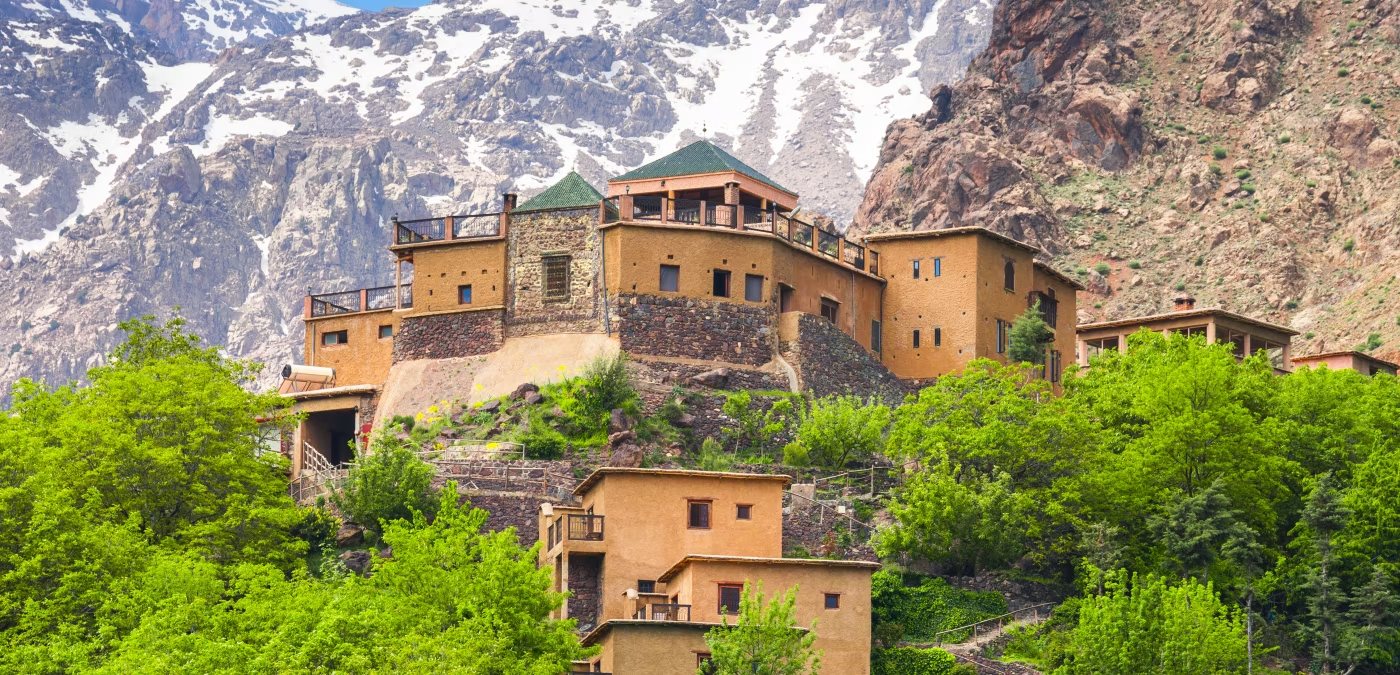
Toubkal, the highest peak in North Africa (4,167 m), is usually climbed from the village of Imlil, south of Marrakech. In winter the high slopes are covered in snow and ice. Ascents in February and March typically need crampons, and avalanches are possible. From May the normal route becomes a non-technical but tiring trek, though snowfields can linger early in the season. The UK Foreign Office advises hiring a professional guide and notes that flash floods are a risk in mountain areas in winter.
Chefchaouen, in the Rif mountains, belongs to the rainy north of Morocco. Most rain falls between November and March, summers are dry and warm, and winter nights are cold.
Month by month at a glance
| Month | Weather | Crowds | Best for |
|---|---|---|---|
| January | Cool cities, cold nights; snow on the Atlas; mild coast | Low after New Year | Marrakech by day, desert with warm layers, snowy Atlas |
| February | Cool, slowly warming; desert nights still cold | Moderate; European winter holidays | Cities, desert; Ramadan expected from about 8 Feb 2027 |
| March | Mild to warm; showers in the north | Rising; Easter on 28 March 2027 | Imperial cities, desert, green Atlas valleys |
| April | Warm days, cool nights; spring winds in the desert | High during school holidays | Everything: cities, desert, Atlas valleys |
| May | Warm to hot inland; dry | Moderate | Desert before the heat, Atlas treks, Chefchaouen |
| June | Hot inland; breezy and cool on the coast | Moderate | Coast, Atlas villages, festivals |
| July | Very hot inland (35–40°C+); windy coast | High on the coast | Essaouira, kitesurfing, high Atlas |
| August | Hottest month inland; warmest sea | Peak on the coast | Coast and mountains; avoid desert midday |
| September | Still hot inland early on, easing later | Falling | Coast, late-month desert, Toubkal |
| October | Warm and mostly dry | Rising; French autumn holidays | Cities, desert, Atlas: one of the best months |
| November | Mild; rain returns to the north and coast | Low to moderate | Cities and desert, good value |
| December | Cool, cold nights; possible snow on the Atlas | Very high from 19 Dec | Marrakech, desert camps (book early) |
Season by season
Spring (March to May)
This is the classic window. Marrakech and Fes are pleasant to walk, the desert is warm without being dangerous, and the Atlas valleys are green. The downside is popularity: Easter and the European spring holidays fill riads and desert camps. In 2027, Easter Sunday falls on 28 March and French school spring holidays run from 3 April to 3 May depending on the zone. Pack a scarf for windy days in the dunes.
Summer (June to August)
Head for the coast or the mountains. Essaouira stays fresh and windy while Marrakech regularly passes 38°C and Merzouga 40°C. If you do go inland, plan visits at dawn and late afternoon, choose accommodation with a pool or air-conditioning, and keep the desert to a short, early stay. Summer is also festival season: in 2026 Essaouira hosted the Gnaoua and World Music Festival on 25–27 June, Fes the Festival of World Sacred Music on 4–7 June and Marrakech the National Festival of Popular Arts on 2–6 July. 2027 dates were not yet published when we checked.
Autumn (September to November)
Early September can still be very hot inland, but from late September onward, conditions resemble spring with fewer crowds outside holiday weeks. October is one of the best months for a full circuit, though French autumn holidays (17 October to 2 November 2026) bring a busy fortnight. November is quieter and often good value, with the first rains on the coast and in the north.
Winter (December to February)
Days in Marrakech are often sunny and around 18–20°C, perfect for the medina, but nights drop to single figures. In the desert, expect pleasant afternoons and very cold nights: bring a warm layer and a hat for sunrise on the dunes. The Atlas is snowy; Imlil makes a beautiful day trip, but summit attempts are for equipped, guided groups. Chefchaouen is at its wettest. From 19 December 2026 to 4 January 2027, Christmas and New Year make this the most expensive and crowded stretch of the year in Marrakech and the desert.
Crowds and prices: the dates that matter
- Christmas and New Year (French school holidays 19 December 2026 to 4 January 2027): the busiest period in Marrakech and Merzouga. Book riads and desert camps well ahead; many riads have only a handful of rooms.
- Easter and spring holidays: Easter Sunday is 28 March 2027; French spring holidays run between 3 April and 3 May 2027 depending on the zone.
- European winter holidays: French winter breaks run between 6 February and 8 March 2027, overlapping with the expected Ramadan dates.
- Summer: July and August are busiest on the coast; inland cities are quieter in this heat.
- Festivals: rooms in Essaouira get scarce around the Gnaoua festival in late June.
Tip: For good weather at calmer prices, look at January after the New Year rush, the first half of March, late May to early June, and November.
Ramadan: 2026 and 2027 dates, and what changes
Ramadan follows the lunar calendar, so it moves about 11 days earlier each year. In Morocco, Ramadan 2026 ran from about 19 February to 19 March, and the Ministry of Endowments and Islamic Affairs confirmed Eid al-Fitr for Friday 20 March after the moon sighting. Ramadan 2027 is expected to begin around 8 February 2027, with Eid al-Fitr around 9 or 10 March. Morocco confirms both dates by its own moon sighting the evening before, so allow a day either way.
What it means for travellers:
- Most Moroccans fast from dawn to sunset. Eating, drinking or smoking in public during the day can cause offence; hotels and many tourist restaurants keep serving visitors, sometimes discreetly.
- Opening hours change. Check shop and restaurant hours, which shift during the month, and expect people to be tired in the late afternoon.
- Traffic can be hectic just before sunset as everyone heads home to break the fast; take extra care on the roads at dusk.
- After sunset, streets come alive, and evenings in the medinas are a memorable time to be there.
- Eid al-Fitr is a national holiday; expect busy transport around it.
- Morocco has been on GMT all year since 20 September 2026, so the old switch of clocks for Ramadan should not happen in 2027. Check before you fly.
Checklist and what to book
- Combining cities and desert? Aim for March to May or late September to mid-November.
- Summer trip? Base yourself on the coast, with riads in Essaouira, and add the Atlas rather than the desert.
- Winter trip? Choose a heated room in Marrakech, pack warm clothes for a night in Merzouga, and keep Chefchaouen for a dry spell.
- Hiking Toubkal? May to October for trekking; winter only with a guide and crampons.
- Christmas, New Year or Easter? Book accommodation and desert camps several weeks to months in advance.
- During Ramadan? Check opening hours, plan meals around sunset and enjoy the evenings.
More planning help is in all our guides.
Questions travellers ask
What is the best month to visit Morocco?
For a circuit of cities, desert and coast, April and October are the most balanced: reasonable heat inland and desert nights that are not too cold. If you can, avoid school-holiday weeks, which are busier and pricier.
Is Morocco too hot in summer?
Inland, for many travellers yes: Marrakech averages around 38°C in July and Merzouga around 43°C. The coast stays fresh (about 18–22°C in Essaouira) and the mountains are pleasant.
Is it cold in the Sahara in winter?
Yes, at night: around 6°C on average in January in Merzouga, sometimes near freezing, while days reach about 19°C. Pack a fleece, a hat and a warm layer for sunrise.
When is Ramadan 2027, and should I avoid it?
It is expected to start around 8 February 2027, with Eid al-Fitr around 9 or 10 March; Morocco confirms by moon sighting. There is no need to avoid it: hotels and tourist restaurants serve visitors, but opening hours change and discretion during the day is appreciated.
Is Essaouira too windy?
The wind blows all year, most steadily from May to September and strongest from July to September: great for kitesurfing, less so for sunbathing. Bring a jacket for the evenings and favour the sheltered medina over beach afternoons.
Where to stay and what to book in Chefchaouen


Sources & fact-check
Checked on 22 October 2026 against the sources below. Rules, prices and safety advice change — confirm with official sources before you travel.
- Morocco travel advice: safety and security (flooding, Ramadan, Atlas hiking) — GOV.UK
- Morocco confirms Friday start of Eid al Fitr after moon sighting — Hespress English
- Ramadan 2027 in the UAE: expected dates and Eid Al Fitr holiday — The National
- Morocco changes time zone to permanent GMT — Time.is
- Climate of Morocco: temperatures, rainfall, sea and best time — Climates to Travel
- Merzouga average monthly temperatures — Weather and Climate
- Toubkal — Wikipedia
- Kitesurf at Essaouira Bay — The Kite Spot
- 2026 festival calendar: major cultural events announced across Morocco — Hespress English
- Vacances scolaires 2026-2027 et jours fériés : le calendrier avec toutes les dates — L'Etudiant
Keep reading
 Safety
Essaouira Is Essaouira Safe for Solo Female Travellers? An Honest Guide
Yes — Essaouira is one of the easiest places in Morocco for a woman alone and calmer than Marrakech, as long as you keep the usual precautio... 8 min read · checked Oct 2026
 Nature & desert
Marrakech Climbing Mount Toubkal: what to know before you go
Toubkal (4,167 m) is a non-technical climb from late spring to autumn, done in two or three days from Imlil with a compulsory licensed guide... 8 min read · checked Oct 2026
 Itineraries
Marrakech Atlas Mountains day trips from Marrakech: which one to choose
Lalla Takerkoust is under an hour away, Ourika and Imlil about an hour and a half, while Ouzoud and Telouet mean close to three hours' drive... 10 min read · checked Oct 2026